KARACHI: Counting has started across Pakistan after a daylong polling in the landmark parliamentary elections, marred by a deadly terrorist attack in Quetta, where 31 people were martyred in a suicide attack.

Preliminary and unofficial results are expected to be out in an hour.

Barring the suicide attack in Quetta, the polling process concluded peacefully in rest of the country amid heightened security. More than 350,000 troops were deployed to maintain law and order on the polling day.

Around 105.95 million eligible voters were expected to exercise their right of franchise in the country’s eleventh general election. More two dozen parties were in the race but a close contest is expected between Imran Khan’s PTI and Shebaz Sharif-led PML-N in most constituencies. PPP is also expected to retain its seats in Sindh, where it is facing a stiff challenge from a grand alliance of opposition parties.

In Karachi, MQP-Pakistan, PTI, MMA, PPP and PSP were in tight race.

In Khyber Pakhtunkhaw, pre-poll surveys showed that PTI was expected to return to power but some reports suggest that Imran Khan’s party was facing tough contest from Muttahida Majlis-e-Ammal, an alliance of religious parties.

Various political parties, including PML-N, PPP and AML, demanded an hour-long extension in the polling time which closed at 6pm. But their request was turned down by the Election Commission of Pakistan (ECP) which maintained that it had already extended the polling duration by an hour.

According to reports, queues outside the polling stations surged gradually with the passage of time where enthusiastic voters including senior citizens, male and female stood firmly to fulfill their national obligation by casting vote in favour of their candidates.

The nation is electing 270 members of the National Assembly and a total of 570 members of four provincial assemblies for the next five-year term (2018-2023). Over 12,500 candidates are vying for national and provincial assembly seats.

Thousands of police and military personnel were deployed to secure the polls as voters cast ballots in polling booths set up in schools, town halls.

Election Commission of Pakistan had established 83, 307 polling stations, 17,000 of them have been declared as sensitive. It had set up 23, 424 polling stations for male voters and 21,707 for female voters.

Around 40, 133 combined polling stations and 43 improvised polling stations were set up. CCTV cameras were installed at sensitive polling stations.

Elections have been postponed on two NA and six provincial seats, while one candidate has been declared winner unopposed on a provincial seat.

Elections have been postponed in NA-60 owing to disqualification of PML-N candidate Hanif Abbasi. Polls have also been postponed in NA-103 over death of independent candidate Mirza Muhammad Ahmed Mughal.

Election on six provincial constituencies including PK-78, PP-87, PP-103, PS-87, PK-99 and PB-35 have also been postponed due to the death of candidates.

As many as 53,000 international, national and local observers and media persons monitored the elections. In order to hold the elections in a peaceful manner and provide a level playing field to all the stakeholders, around 7,70,000 army troops performed duty out and inside the polling stations.

As many as 180,000 regular army and 190,000 reserves weree deployed at the polling stations.

In the election 2013, overall voter turnout was recorded at 55.02%.

The PML-N got a majority of votes (14.8 million) followed by PTI (7.5 million), PPP (6.8 million) and MQM (2.4 million).

Independent candidates have picked up 5.8 million votes.

In the 2013 election, PML-N got 125 seats, PTI 27, PPPP 31, Independent 32, MQM 18 and JUI-F 10 and PML-F 05.

ISLAMABAD: The Election Commission of Pakistan (ECP) on Wednesday decided not to extend the polling time, despite requests from major political parties of the country, including Pakistan Muslim League-Nawaz (PML-N) and Pakistan People’s Party (PPP), to extend the time for an hour.

PML-N held an emergency meeting over the matter, which was attended by the party’s senior leaders, and requested the ECP to extend the polling time.

“Voting is a fundamental right of every citizen and to ensure that citizens exercise their right, the ECP should extend polling time,” said Senator Mushahid Hussain.

Earlier, the PML-N has sent a letter to the electoral body seeking extension in the polling time by an hour due to “voters standing in long lines in the hot and humid weather”.

Requesting the ECP to extend the polling time, under section 70 of the Election Act 2017, the PML-N has said that “we are receiving complaints on a large scale nationwide and PML-N would appreciate if this demand of the voters is accepted”.

PPP has requested the same from the ECP, saying that the voting process across the country is very sluggish due to general disorganisation in the polling stations.

Moreover, Pakistan Sarzameen Party’s Mustafa Kamal and Awami Muslim League (AML) chief Sheikh Rasheed have also requested the ECP to extend the polling time.

However, Pakistan Tehreek-e-Insaf (PTI) has criticised the PML-N, saying that “even if the polling time is extended by two hours, the N-league supporters won’t come out to cast vote”.

Earlier, it was reported that the ECP is not considering to extend the polling time.

Following rain, polling was temporarily halted across some Lahore areas, while at a polling station in NA-29 (Peshawar III) voters and polling staff face difficulties due to load-shedding.

Moreover, there have been several delays due to clashes between rival party supporters and other irregularities.

In addition to long queues, polling did not begin till 1pm at two Karachi NA-241 polling stations. The process of voting was temporarily halted at a station in Upper Dir’s NA-5 constituency after alleged rigging, in Larkana’s NA-200 and PS-11 constituencies after an explosion.

Furthermore, voters and candidates have both decried the general disorganisation in the polling stations.

UPPER DIR: Polling is currently underway across the country on Wednesday and women in Upper Dir have stepped outside to cast their votes for the first time in the area.

It was reported that long queues of women were formed outside polling stations in NA-5 and PK-12 constituencies.

The Election Commission of Pakistan (ECP) had earlier said that any area where women are stopped from or face hindrances in voting could face the election in its constituency becoming invalid.

Furthermore, the ECP said the results of any constituency would be declared invalid should the female turnout be lower than 10 per cent. Any person found involved in or facilitating such a deal may face up to three years in prison.

Earlier, two provincial chapters of the Election Commission of Pakistan (ECP) also stated that any area where women are stopped from voting or face hindrances during the election could face disqualification from the election in its constituency.

As the country prepares for elections on July 25, the ECP’s Khyber Pakhtunkhwa (KP) and Balochistan chapters took notice of some reported deals that had been made to not allow local women to vote.

“The results of any constituency would be declared invalid should the female turnout be lower than 10 per cent,” had said the ECP officials, adding, “any person found involved in or facilitating such a deal may face up to three years in prison.”

taboola

ISLAMABAD: There are 15 important points that voters will have to keep in their mind while casting their vote today (Wednesday) in one of the most crucial elections of the national history.

For the second time in whole electoral history of Pakistan under present system of voting, elections are being held in summer. Casting the vote as early in the morning as possible along with all the family members will be the best option. All the voters must be mentally ready to face tough weather conditions and even rain in some cities though there is no rain forecast so far.

The Election Commission of Pakistan (ECP) has already explained the voting pattern through print and electronic media to the voters and political parties’ workers will also be there to guide them about the procedure of voting. However, voters should keep following 15 points in their mind so that along with voting for their choice candidate, they can play their role towards ensuring a transparent election process;

(1) All voters can check the location of their polling station by sending their CNIC number through an SMS to 8300. Upon reaching the polling station, the voters will maintain discipline and will make queues. At the time of entering the polling station, they can be checked for security reasons and can be asked whether they are carrying their original CNIC or not. However, no process of verification can be done at the entry point of the polling stations by anyone. If someone tries to check their CNIC number and starts matching it with some polling list i.e. start complete verification process, the voters must resist this and complaint. This pattern is used to delay voting process as complete verification is part of process of casting a vote and can only be done inside the polling station. In case, someone is trying to find out the CNIC numbers of the voters form some polling list at the entry point of polling stations, this is verification process and can’t be done at the entry point and voters shouldn’t allow it. The voters should ask the concerned persons doing this illegal act to stop it and if it is not stopped the voters should immediately try to contact media persons present there and report to the concerned ECP officials and the office of the Returning Officer (RO).

(2) Election is a hectic exercise and a huge operation will be underway across the country from 8:00am to 6:00pm. Voters must keep calm and address others, especially those on election duty with utmost respect. However, all Pakistanis are respectable and no one can misbehave with them in any way at any stage during the voting procedure. If anyone at the entry point or inside the polling station misbehaves with any voter, same should be taken seriously and should be reported to concerned senior polling staff, media, political parties’ office bearers and all concerned. If anyone at the entry point misbehaves or addresses voters in a threatening or insulting way, the same attitude should be immediately reported after giving warning.

(3) No one, neither activists of any political party nor anyone on election related duty can ask the voters to vote for some specific candidate. Mostly voters are aware of this, but in some cases, the elderly or simple people in some areas may not be aware that asking them by the officials on duty to vote for some specific candidate or party on the polling day is a crime. Activists of political parties can create this awareness among all voters and can ask them to immediately inform about such an incident. If any voter faces such a situation, same must be reported to polling staff, concerned ECP officials and media without any delay.

(4) While in the polling room and after obtaining the ballot papers and stamp, the voter will proceed to a voting booth where privacy of the voter will be ensured. No one from the polling staff, polling agents and even the security personnel can go even near that booth. If during casting of the vote, any voter feels that anyone is coming close to that booth or trying to watch him/her, he/she must immediately protest, complain to the presiding officer and instantly file a complaint to the concerned RO and ECP authorities and inform media.

(5) If any voter feels or notes that the said voting booth where his/her privacy must be ensured is being monitored through any kind of cameras already installed, he/she must immediately inform all concerned including media about the situation.

(6) Except in Islamabad, all voters will be given two ballot papers and they have to stamp on the election symbol of their choice candidate in a way that the stamp sign completely remains in the box containing the said election symbol. The stamp sign must not go outside the box containing the election symbol of the choice candidate of the voter. The ballot paper is rejected if it is stamped twice or some other sign is placed on the ballot paper or any word is written on it. Political parties’ activists and workers guiding voters towards the polling station must guide voters on this count.

(7) The ECP has banned all the voters and polling agents from keeping their cellphones with them during the polling process but cell phones can be needed in case of any unexpected situation especially to file a complaint against any irregularity. So voters can also plan the voting in a way that some family members or friends can wait outside the polling station while others vote and then vice versa.

(8) All voters must resist any attempt by anyone on the entry points of the polling stations to delay the polling process by adopting any strategy. In such a situation, voters should inform media, RO and concerned ECP officials.

(9) Voters should be aware of the fact that at times, some untoward incidents like exchange of harsh words etc. took place at polling stations which can stop the polling process for a while. Often the objective of creating such a situation is to delay the voting process so that the voters who haven’t casted their votes and waiting in queues may leave premises and go back to their homes considering the voting process has been stopped or the situation may become uglier. Mostly, this technique is mostly used on the polling station in the areas where vote bank of some unwanted political party is strong. By stopping the voting process for some time by using this technique, the troublemakers basically ensure that the number of votes of that specific candidate can be minimised. In such a situation voters waiting in queues should try their best to wait at some safe place and inform media and police. Voters should not leave the place without voting and should wait for the voting process to resume in such a situation.

(10) If voters observe any suspicious activity by anyone, either by the workers of any political party or the polling staff or the security staff, they must try to make an evidence of such a happening. In absence of the mobile phone, it would be difficult to make the evidence but before complaining about such suspicious or illegal activity to the concerned authorities or informing media, the voters should try their best to make evidence from some location where mobile phones can be taken.

(11) Voters must cooperate with security officials in all regards so there cannot be any security breach and voting process can be completed peacefully. In a situation when because of any incident, there is rush of people in the polling room, the voters should be extra cautious and vigilant about any suspicious activity there.

(12) Voter should inform the media persons and observers present at the polling stations about their experience of voting. In case of observing anything unusual or fishy, they must highlight it through media.

(13) Ideally, if a voter obtains some ‘parchi’ from the camp of some political party about details of his/her vote, the same must not be carrying name or symbol of any political party. However, they cannot be stopped from entering in the polling station merely because they are holding this piece of paper in their pocket. If they are stopped they must inform the media and report to the RO office immediately.

(14) The voters must immediately inform media, RO office and concerned ECP officials in case the polling staff hasn’t reached in time or the polling process hasn’t started in time. This can be a delaying tactic at some polling stations.

(15) Towards the closing time of voting, all the votes present at the entry point of a polling station are allowed to enter the polling station. In case, any voter(s) is not allowed, he/she must try to convince the staff deputed there and in case of their refusal, they must immediately inform all concerned officials and media.

ISLAMABAD: The National Database and Registration Authority (Nadra) issued 650,000 Computerised National Identity Cards (CNICs) to the citizens in five days and made them eligible to cast vote in general election which are being held on Wednesday.

According to the spokesperson of Nadra, the authority printed 650,000 CNICs in just five days so that the citizens could participate in electoral process in the country.

“The courier company delivered 585,000 CNICs to cards centres. A total of 300,000 citizens have already received/collected their CNICs in the period of five days while 300,000 CNICs are lying at NADRAs’ centres,” he stated.

Hundreds of CNICs found from Lahore drainage on eve of general elections

The spokesperson said that the process of printing identity cards continued uninterrupted in the last five days, adding that the authority’s offices would also remain open till 9pm on Tuesday and till 2pm on the polling day.

“After collecting identity cards from the Nadra’s offices the citizens can cast their votes,” the spokesperson further added.

PESHAWAR: More than 70,000 police and security personnel will be deployed at 12,685 polling stations across Khyber Pakhtunkhwa to ensure peaceful elections today (Wednesday).

DIG (operations) of the provincial police Mohammad Ali Babakhel told reporters at the Central Police Office here that the police had finalised arrangements for peaceful election across the province.

He said 3,174 polling stations had been declared the most sensitive and 4,539 sensitive in the province. The DIG said a central control room had been set up at the CPO, which was linked with the offices of the regional and district police officers.

He said if trouble was reported at polling stations, the control room would alert the nearby police mobile for action. Mr Babakhel said the police would deploy two scanner vehicles for surveillance in the provincial capital and that both would patrol the city.

He said both vehicles mounted with four cameras would serve as first responders in case of emergency and would broadcast live feed to the control room.

The DIG said besides police personnel, 94 Frontier Constabulary platoons, 500 Azad Jammu and Kashmir police officials and 15,000 personnel of other departments would also ensure security in the province on July 25.

City police chief Qazi Jamilur Rehman, who was also in attendance, said the police had set up a command and control system using own resources to monitor security arrangements at all polling stations in Peshawar.

He said in case of any emergency, the police would immediately rush to the place.

The official said around 8,000 police personnel would be deployed in the provincial capital.

He said 17 Quick Response Force teams armed with heavy weapons and 20 patrol units would also be on duty in the city.

Mr Rehman said around 70 ‘nakabandis’ (checkpoints) would be set up across the provincial capital, while 12 teams of the bomb disposal unit and 10 teams of sniffer dogs would be deployed.

He said the city police’s control room had been linked with polling stations.

Peshawar commissioner Shahab Ali Shah told Dawn that the administration had made foolproof security arrangements to hold peaceful elections.

He said all departments were working in tandem to ensure quick response to any emergency on the election day.

The commissioner said the health department, fire bridge, rescue force and law-enforcement agencies worked in close coordination to meet any eventuality.

He said CCTV cameras had been installed to examine security checks at polling stations in the capital and the erstwhile Frontier Region Peshawar.

ISLAMABAD: As the nation goes to polls today (on Wednesday), the Election Commission of Pakistan (ECP) is optimistic about a record turnout of voters.

“We expect to see a record turnout of voters due to the increased level of awareness about importance of vote,” ECP Secretary Babar Yaqoob Fateh Muhammad said at a media briefing a day before the elections.

Though he did not present the estimated turnout, his optimism meant it is expected to be greater than 55 per cent turnout of the 2013 general elections, including valid and non-valid votes. The 2013 turnout was the highest in the federal capital territory (62.29 pc), followed by Punjab (58.38 pc), Sindh (51.58 pc), Khyber Pakhtun­khwa (44.64 pc) and Balochistan (38.97 pc).

Read: Nation’s tryst with destiny today

The ECP secretary said out of the total 849 national and provincial assembly constituencies, polling would take place in 840 constituencies — 270 of the 272 National Assembly constituencies and 570 of the 577 provincial assembly constituencies.

Independent candidates outnumber the candidates fielded by political parties

He said polling in most of the nine constituencies had been postponed due to death of contesting candidates, with the exception of NA-60 where polling had been deferred due to disqualification of Pakistan Muslim League-Nawaz candidate Hanif Abbasi.

In all 11,673 candidates are in the run, 3,428 for National Assembly and 8,245 for provincial assembly seats.

The statistics shared with the media reveal that independent candidates outnumber the candidates fielded by political parties. The number of candidates fielded by parties is 5,661 while the number of independent candidates in the race is 6,012.

For National Assembly seats, 1,623 candidates are in the race, 1,805 of them fielded by political parties and 1,623 independents. KP is the only province where the number of independent candidates for National Assembly seats is higher than those fielded by parties.

For National Assembly seats, parties have fielded 820 candidates in Punjab, 441 in Sindh, 335 in KP, 173 in Balochistan and 36 in the federal capital. The number of independent candidates for National Assembly seats includes 714 from Punjab, 373 from Sindh, 386 from KP, 117 from Balochistan and 33 from the federal capital.

For provincial assembly seats, 8,245 candidates are in the run, 3,856 fielded by parties and 4,389 contesting independently. The number of independent candidates is higher for Punjab and Sindh assemblies than the party ticket holders. As many as 2,256 independents and 1,719 party ticket holders are contesting Punjab Assem­bly seats while 1,186 independents and 993 party candidates are in the run for Sindh Assembly seats. In KP and Balochistan there are 675 and 469 party ticket holders and 470 and 477 independents, respectively.

Of the 120 parties enlisted with the ECP, 95 are contesting elections and seven of these 95 parties have failed to meet the mandatory requirement of awarding five per cent party tickets for general seats to women.

A total of 8,508 polling stations and 244,687 polling booths have been established across the country. As many as 40,632 of the polling stations are combined and there are 23,104 male and 21,322 female polling stations. As many as 17,007 polling stations have been declared highly sensitive.

VOTERS: There are 105,955,409 registered voters, including 59,222,927 male, 46,730,569 female voters besides 1,913 transgender voters, of whom 1,356 are in Punjab alone.

The data shows that 17,443,094 voters forming over 10 per cent of the total are in the age bracket of 18-25 years. This means they will be exercising their right to franchise for the first time. Another 28,995,231 voters are aged between 26 and 35 years.

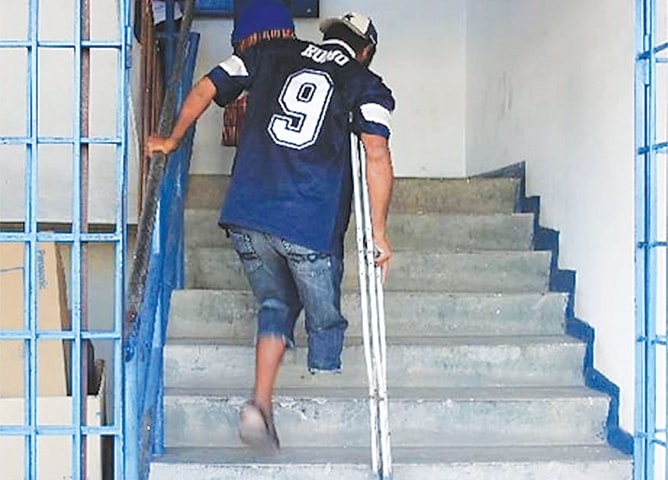
As many as 215,527 of the voters are suffering from physical disabilities, 163,995 of them male and 52,432 female. The ECP has announced the people with disabilities would be able to avail the postal ballot facility and those who choose to go to polling stations should be allowed to vote on priority basis, without making them to wait in the queue. The ECP has trained polling staff to sensitively deal with such voters.

The total number of voters belonging to religious minorities comes to 3,362,016, which includes 1,864,800 male and 1,497,216 female voters.

Meanwhile, Chief Elec­tion Commissioner (CEC) retired Justice Sardar Muhammad Raza has assured voters that the ECP is trying its best to hold free, fair and unbiased elections.

In a video message released by the ECP on Tuesday, he urged voters to fulfill their “duty towards the nation” by casting their votes responsibly.

Over the past few days, the ECP has released multiple notifications for voters, polling staff and political parties, explaining what to do and what not to do on the polling day.

On Monday, the election body issued a list of requirements that a ballot paper would have to meet in order to be included in the counting process. Ballot papers that are missing the official code mark or assistant presiding officer’s signature or have a paper attached to them will not be considered valid.

Asking a voter who he/she votes for, spoiling ballot papers or stamps in any way and taking a picture of ballot paper are some of the actions that would land the offender in jail for up to three months and result in fines up to Rs100,000, or both, according to an ECP notification.

Millions of registered voters are flocking to polling stations across the country to cast their vote in Pakistan’s 11th general election. According to DawnNewsTV, the first vote has already been cast — in Khyber Pakhtunkhwa’s Charsadda.

The battle is set to come down to three parties: Pakistan Muslim League-Nawaz (PML-N), Pakistan Peoples Party (PPP) and Pakistan Tehreek-i-Insaf (PTI).

While polling stations officially opened for voting at 8am, enthusiastic citizens queued up outside their respective stations as early as 7am. PML-N Chief Shahbaz Sharif was among the first people to cast his vote, according to DawnNewsTV. Speaking to the media outside the polling station in Model Town, Lahore, he requested that people come out and vote for PML-N.

Election 101: Everything you need to know about casting your vote

July 25 was earlier declared a public holiday by the ECP, as an effort to increase voter participation.

Polling agent on duty in Khyber Pakhtunkhwa on Wednesday. — DawnNewsTV

At 371,388, a record number of troops have been deployed at polling stations at the ECP’s request to maintain law and order and take action against harassment.

Polling stations will remain open for voting till 6pm, as per the deadline announced by the ECP for voters.

ISLAMABAD: The Election Commission of Pakistan (ECP) has directed the media to avoid airing any unofficial result for at least one hour after the voting process is over at polling stations.

In its code of conduct for coverage at the polling station and announcement of results, the ECP has asked broadcasters to refrain from airing any final formal, definite election result.

“The broadcasters will air only with a clear disclaimer that they are unofficial, incomplete and fractional results which should not be taken as a final result until the election commission has announced the final result,” it added.

Only accredited media persons will be allowed to enter a polling station along with the camera for making footage of the voting process or counting process only for on-time.

However, they cannot make footage of the screened off compartment too maintain the ballot’s secrecy.

ISLAMABAD: The nation Wednesday will elect 270 members of the National Assembly and a total of 570 members of four provincial assemblies for the next five-year term (2018-2023).

Around 105.95 million eligible voters – 59.22 million males and 46.73 million females – will exercise their right to vote to mark another democratic transition from one elected government to another.

About 1,1673 candidates are vying for 270 national and 570 provincial seats.

Elections have been postponed on two NA and six provincial seats, while one candidate has been declared winner unopposed on a provincial seat.

Elections have been postponed in NA-60 owing to disqualification of PML-N candidate Hanif Abbasi. Polls have also been postponed in NA-103 over death of independent candidate Mirza Muhammad Ahmed Mughal.

Election on six provincial constituencies including PK-78, PP-87, PP-103, PS-87, PK-99 and PB-35 have also been postponed due to the death of candidates.

Election Commission of Pakistan has established 83, 307 polling stations, 17,000 of them have been declared as sensitive.

The ECP has set up 23, 424 polling stations for male voters and 21,707 for female voters.

Around 40, 133 combined polling stations and 43 improvised polling stations have been set up. CCTV cameras have been installed at sensitive polling stations.

The ECP has delivered election material including ballot boxes, screened off, compartments, nylon stamps, brass seals, tamper evident bag, stationery seals, marking aid rubber stamps and indelible ink vials to the polling stations.

The ballot papers have already been sent to respective polling stations.

As many as 53,000 international, national and local observers and media persons will monitor the elections.

In order to hold the elections in a peaceful manner and provide a level playing field to all the stakeholders, around 7,70,000 army troops will perform duty out and inside the polling stations.

As many as 180,000 regular army and 190,000 reserves will be deployed at the polling stations.

About 449,465 police force will perform elections duty.

The ECP has appointed 2720 district returning officers and returning officers and assistant returning officers to conduct the proceeding of the elections in a free and fair manner.

The General Elections 2018 are different from the previous elections in several ways.

These are the first elections after electoral/legal reforms took place in the country.

These are also first ever elections in history that preparation of electoral rolls and delimitation have been simultaneously proceeded for.

Similarly, Computerized Electoral Rolls System will be fully operational.

The GIS enabled polling scheme will help each voter to have a look of his polling station on his computer/mobile.

The Result Management System having legal cover will be fully functional, while Results Transmission System will be used for early results.

Moreover, water mark ballot papers imported from UK and France are being used in these elections.

In the election 2013, overall voter turnout was recorded at 55.02%.

The PML-N got a majority of votes (14.8 million) followed by PTI (7.5 million), PPP (6.8 million) and MQM (2.4 million).

Independent candidates have picked up 5.8 million votes.

In the 2013 election, PML-N got 125 seats, PTI 27, PPPP 31, Independent 32, MQM 18 and JUI-F 10 and PML-F 5.

The Supreme Court (SC) on Tuesday rejected Awami Muslim League (AML) chief Shaikh Rashid’s plea for going ahead with the polls in NA-60 after they were deferred by the Election Commission of Pakistan (ECP) after a special court disqualified a candidate, PML-N leader Hanif Abbasi, in the ephedrine case.

The top court validated the Lahore High Court’s (LHC) verdict to upheld the ECP’s decision, on the basis that it is practically impossible to hold elections in NA-60 on Wednesday, July 25. According to the ECP, it would take a lot of time to print new ballot papers for the 700,000 voters residing in the constituency.

Abbasi was disqualified just three days ahead of the general elections. At the time of his conviction, all preparations for the polls, including printing of ballot papers inscribing his name, had been finalised.

Furthermore, he was the only PML-N candidate in the constituency as the party had not fielded any covering contestant in NA-60.

Subsequently, the ECP postponed the polling in NA-60 constituency following Abbasi’s disqualification by the Control of Narcotics Substances (CNS) Court in Rawalpindi a day earlier.

As the ECP is “bound to provide a level playing field to all candidates […] the general election in NA-60 is postponed and will be conducted after the scheduled general elections, along with other postponed elections,” the commission had said.

Yesterday, Rashid — who otherwise would have enjoyed a virtual walkover in the absence of his main rival — had moved the LHC against the ECP’s decision. However, the high court rejected his plea, prompting Rashid to move the top court.

LHC Justice Mustaqeem, while dismissing Rashid’s plea earlier, had considered the possibility of printing new ballot papers, at which the ECP’s lawyer informed him that it was out of question because it would take a lot of time to print new ballot papers for the 700,000 voters residing in the constituency.

The apex court heard Rashid’s petition today, in which he had argued that the election could only be postponed by a returning officer (RO) if one of the candidates passes away. He argued that the ECP had no right to postpone the election for any other reason.

Chief Justice Mian Saqib Nisar had subsequently issued notices to the federal government and the ECP, seeking their responses to the petition. He had remarked that the petition was being heard to elaborate on the point Rashid had raised.

However, after hearing the facts of the matter, the chief justice eventually advised Rashid to wait and contest a ‘fair’ election instead of winning on a walkover, “not for himself but for the sake of voters”.

Chief Election Commissioner (CEC) retired Justice Sardar Muhammad Raza on Tuesday assured voters that the Election Commission of Pakistan (ECP) was “trying its best to hold free, fair and unbiased elections”.

In a video message released by the election body, Raza urged voters to fulfill their “duty towards the nation” by casting their votes responsibly on polling day on July 25.

Also read: Thinking of not voting in Pakistan’s elections? Think again

Over the past few days, the ECP has released multiple notifications for voters, polling staff and political parties, explaining what to do — and what not to do — on polling day.

On Monday, the election body issued a list of requirements that a ballot paper would have to meet in order to be included in the counting process. Ballot papers that are missing the official code mark or assistant presiding officer’s signature or have a paper attached to them will not be considered valid, according to the ECP.

Last week, the ECP released a notification informing voters, polling staff and political parties of actions that would constitute as crimes on election day and would fall under the jurisdiction of the district returning officers.

Asking a voter who they voted for, spoiling ballot papers or stamps in any way, taking a picture of the ballot paper are some of the actions that would land the offender in jail for upto three months, result in fines upto Rs100,000, or both.

General elections are just round the corner and all parties cannot emphasise enough on the inclusion of all sections of society in the electoral process. That said, what should be a cause of concern are the conditions at the polling stations in terms of accessibility and basic facilities for the marginalised groups of society including persons with disabilities (PWDs) and the transgender community.

Due to inadequate basic facilities and inaccessibility to polling stations set up in public buildings, physically-challenged people, and members of transgender and intersex community are reluctant to exercise their right to vote in the July 25 elections.

According to an accessibility audit conducted by a non-governmental organisation (NGO), Pakistan Alliance for Inclusive Elections (PAIE), the situation is unnerving as 95 percent of the sampled polling stations in Islamabad Capital Territory (ICT) do not meet the mandatory accessibility criteria for PWDs.

Having the legal right to cast your ballot isn’t much comfort when poor access or social taboo means you can’t physically do it

Survey findings reveal that the approach pathways of 54 percent of the sample polling stations “are not firm and obstacle free”, while at 69 percent polling stations the “pedestrian gates do not provide level access to the building.” The study also shows that 65 percent of the sampled polling stations “do not meet the mandatory criterion of functional lighting at the gate.”

In a previous study compiled by PAIE during by-polls in the most important constituency of Peshawar NA-29 — denoted as NA-4 until fresh delimitation of constituencies by the ECP — about 80 percent polling stations of the area did not meet accessibility criteria, whereas the inclusion of PWDs in the electoral process and accessibility of polling stations is vital among other procedural and administrative measures.

According to the latest data available at the Pakistan Bureau of Statistics, there are 3.3 million PWDs in Pakistan. One of the major challenges faced by PWDs in their mobility is accessibility to buildings.

A senior citizen keen on exercising his right to vote | Photo by Tanveer Shahzad/White Star

“With the upcoming elections, it is high time that the stakeholders on both demand and supply side use their resources in making this election inclusive,” the study suggests. “For this, accessibility of polling stations is one prerequisite.”

“I am not able to cast my vote even in the posh area of Peshawar Saddar, because the polling stations are not accessible,” says Mushtaq Hussain Mohmand, a 52-year-old disabled person.

Mohmand also runs an organisation, Friends of Paraplegics, for the rights of PWDs in KP. The organisation has more than 12,000 registered disabled persons including almost 4,000 women and girls.

He says that they have decided to boycott the upcoming general elections because of the accessibility issue at the polling stations in the entire province. According to him, although politicians want their support in the electoral process, they hardly bother to discuss the issues of PWDs in the assembly, once they come into power.

There is a need to provide adequate facilities in order to include physically-challenged people in the electoral process | https://www.globalaccessibilitynews.com

He says that they would start campaigns on social media and in the mainstream media about the problems confronting PWDs during and after the electoral process, adding that in the general elections people from his community should be able to cast their votes.

“The government should establish separate polling stations that have ramps, functional lightning and other basic facilities for disabled people,” he says.

He mentions that the polling stations established in public places do not have washrooms for both PWDs and senior citizens, which is also a big obstacle for a physically-challenged person while exercising his/her right to vote.

Qamar Naseem, a Peshawar-based activist working for the rights of transgender people, highlights various issues that transgender people face in order to cast their votes. “Most of them are reluctant to visit polling stations due to security issues and societal taboos,” he says. “According to Nadra, there are 1,948 registered voters from the transgender and intersex community but only one percent would be willing to exercise their right to vote. Although 13 transgender persons had submitted their nomination papers for national and provincial assemblies to contest the general elections, most of them withdrew their nominations later. Two transgenders will contest elections on National Assembly seats while five are aspirants of KP and Punjab provincial assemblies,” he adds.

Physically-challenged senior citizens face lack of facilities | Photo by Arif Ali /White Star

A study conducted by his organisation reveals that, in the last three years, about 54 transgender people were killed while 1,133 cases of sexual and physical abuse were recorded in KP. It is the hostile environment towards transgender and intersex community which forces them to remain in specific vicinities.

Naseem says that transgender persons were mostly living in major cities of the province, i.e. Peshawar and Mardan, instead of their native villages, pointing out that they had left their hometowns because of social norms and values.

“Transfer of vote facility is not provided by the ECP so transgender persons have to exercise the right to vote in their native areas,” he says. “How can a transgender person take the risk of going to the areas which they have left, to cast their vote? Their families did not accept them and that is the reason they live in city areas to earn the livelihood.”

He says that the issues faced by transgender persons in their daily life stopped them from participating in electoral process, adding that the government should transfer their vote to those areas where they were living. One separate polling station in each major city of the province would help them to cast their vote, he suggests.

On condition of anonymity, a public servant told Dawn that when she was taking a training course for the July 25 general elections, she did not hear even a single word about the facilities for transgender persons and PWDs in polling stations. She further said that the election manuals and guideline books provided to her also lacked materials on how physically-challenged and transgender persons could cast their votes on election day in crowded polling stations.

“The ECP has issued directives to the KP provincial government to provide basic facilities for PWDs in 2018 elections, including proper lighting, open doors and ramps in the polling stations at public buildings,” says Sohail Ahmad, spokesperson of KP Election Commission.

He adds that about 14,655 polling stations have been established across the province in which 534 do not meet the accessibility criteria. He further says that the KP government is trying to make those accessible for special persons.

He says that for the forthcoming general elections, the ECP has mostly established polling stations on ground level where PWDs could cast their vote without any problem, adding that they could also exercise their right to vote via postal ballot.

Responding to a question, the spokesperson of the provincial election commission says that the transgender persons could cast their votes in both male and female polling stations, adding that a transgender could cast vote according to his/her gender mentioned during the voters’ registration process.

ISLAMABAD: There are 11 important points that the polling agents of political parties must keep in mind to avoid any instances of rigging and irregularities by the polling staff or the voters.

According to reports, there will be strict security and no one other than the polling staff, polling agents, contesting candidates and their designated election agents will be allowed to enter the polling stations.

The security staff and certain ECP officials however can visit the polling stations. There will be a strict ban on the use of mobile phones by the voters and polling agents. The polling agents have to strictly monitor every step of the polling process and keep a vigilant eye on the polling boxes.

The polling agents cannot leave the polling room, as in such an instance any illegal activity can happen in their absence. Monitoring polling process and safeguarding polling boxes is their primary duty. Anything fishy can happen if they will leave the polling rooms even for a moment. There will be no way of communication for the polling agents.

According to the procedures, the polling agents have to immediately report to the returning officers of any irregularity by the polling staff or about any other wrongdoing. What will they do this time in absence of any communication channel even during the process of counting of votes will be a real challenge for them.

In addition to their routine duties, polling agents of all political parties should keep following 11 points in their mind before the polling day;

(1)- In this situation of tight security and keeping in view the little chances of movement or passing messages outside, there will be no way out to file complaint immediately to the returning officer, ECP officials concerned or to informing media in case of any irregularity. The polling agents, in a situation when they will be virtually imprisoned inside the polling stations, should plan in advance to manage the situation during the polling process in case they want to file a complaint or want to convey some message about happenings, possible irregularities, inside the polling station to their party workers and the media.

Like, all polling agents must arrange to depute some of their associates outside the polling stations so that the message can be conveyed to them through any voter or through any other means so a complaint about any irregularity can be filed immediately and media can be informed.

(2)- Polling agents must ensure that no disorder is created. They must try their best to keep calm. No harsh words should be exchanged on minor things. If some untoward situation is created and people or security men are gathered in polling room, this can be the ideal time to do anything fishy. So keeping calm and avoiding any clash or unpleasant situation is the key. If mess is created, troublemakers will be automatically benefit.

(3)- Any suspicious activity, especially when there is a rush of people or when the security people come in the polling station in large number to control such a situation, must be observed carefully. Polling agents must keep an eagle eye on the polling boxes especially when the disorder is created and there is rush of people. Miscreants will try to take advantage of such a situation.

(4)- Poling agents must depute some party workers outside the polling stations as their associates who can inform him about any attempts to slow down voting process from outside the polling station. Slowing down the polling process can badly impact the result of any constituency.

(5)- Polling agents should also manage to report to ROs by themselves or through their associates if the journalists or observers would be stopped from their duty inside the polling stations and from monitoring the process. Journalists only monitor proceedings and transparency is ensured because of their presence. Journalists can register complaints at their own but if any instances are reported by the polling agents, those will carry more weight.

(6)- The associates of polling agents outside the polling station will also inform polling agents or will file complaint to the ROs at their own about any unnecessary checks or obstacles being created to slow down voting on the entry points of polling stations. If instead of body searching the voters, their verification process also starts outside the polling stations, same must be reported to the RO, concerned ECP officials and media as only polling staff deputed inside the polling station can do this. If verification of the identity of the voter separately in addition to the verification that will be done by polling staff in collaboration with polling agents of all the political parties will be required, same will be done inside the polling stations and not outside.

(7)- Similarly, associates of polling agents deputed outside the polling stations should also inform their polling agents, media, the ECP staff and the RO if the voters would be barred from entering into polling stations on any pretext. At times voters carrying voting slips of specific political parties are stopped even from entering the polling stations.

Polling agents must also ensure that their associates outside the polling station can inform them that all concerned about delay in polling being caused by stopping voters from entering in polling station after allowing few numbers of voters to go inside. This method was adopted in recent past and resulted in slowing down the voting to a large extent. Voters outside the polling station can only be stopped in queues if the polling station has big number of voters inside already and which can be easily evident.

(8)- Polling agents must ensure to reach polling stations much before time and they must also ensure not to travel alone and make arrangements for their security. In case will late at polling stations, it will cause serious problems.

(9)- Polling agents must immediately inform ROs, concerned ECP staff and media if the polling staff will reach late at any polling stations. Polling process will badly suffer in such cases. Some political parties manage such situations and this technique was part of rigging strategies planned by some political parties in past on the polling stations where their opponent political parties have strong vote base.

(10)- Towards the closing time of voting, the polling agents themselves and with the help of their associates deputed outside the polling station will ensure that all those voters present outside the gate at 6:00 pm are allowed to enter in the polling station and if they are not allowed they must immediately inform media, RO and concerned ECP officials.

(11)- Polling agents should manage to report if they observe any hanky panky during polling process in the polling room or in the rooms adjacent to polling rooms. Any suspicious activity must be reported to media, RO and ECP staff immediately and same can also be done by conveying messages through voters going outside after casting their votes. Actually, it will be wrong if a polling agents will try to speak to a voter before he has casted his/her vote. However, after a voter has casted a vote, polling agents can convey any messages outside through them.

Other than this, political parties and their focal persons must immediately inform ECP officials, media and Police if any of their active workers are kidnapped or arrested during the polling process.

RAWALPINDI: The Lahore High Court (LHC) Rawalpindi bench on Monday rejected Sheikh Rashid’s plea challenging the election commission’s order of postponing polls in NA-60 Rawalpindi following life term awarded to PML-N candidate Hanif Abbasi.

The Election Commission of Pakistan (ECP) had postponed the election in NA-60 after Sheikh Rashid’s main rival PML-N’s Hanif Abbasi was disqualified after being sentenced in the ‘ephedrine case’ last week. The Awami Muslim League (AML) chief challenged the ECP order in the Rawalpindi bench of the LHC .

Justice Mujahid Mustaq of the Rawalpindi bench upheld the election commission’s decision regarding postponement of the elections in NA-60. “Our petition has been rejected by the high court. We will go to the Supreme Court,” Sheikh Rashid’s lawyer said.

Shaikh Rashid’s stance was that the election can only be postponed by a returning officer (RO) if one of the candidates passes away. His petition stated that the ECP had no right to postpone the election for any other reason. The ECP, as well as a lawyer for another candidate from NA-60, Rashid Gardezi, had opposed Rashid’s petition. Gardezi’s lawyer had asked what would happen if the elections were given a go-ahead and Abbasi receives “hundreds of thousands of votes” in defiance of his disqualification.

LHC Justice Mujahid Mustaqeem inquired about the possibility of printing new ballot papers, at which the ECP’s lawyer said that it would take a lot of time to print new ballot papers for the 700,000 voters residing in the constituency. He further stated that all possibilities had been taken into consideration by the ECP before reaching the decision of postponing the election.

The ECP had on Sunday announced that polling in the NA-60 constituency has been postponed due to Abbasi’s disqualification by the Control of Narcotics Substances (CNS) Court of Rawalpindi a day earlier. As the ECP is “bound to provide a level playing field to all candidates; the general election in NA-60 is postponed and will be conducted after the scheduled general elections, along with other postponed elections,” the commission had said.